WHO WE ARE
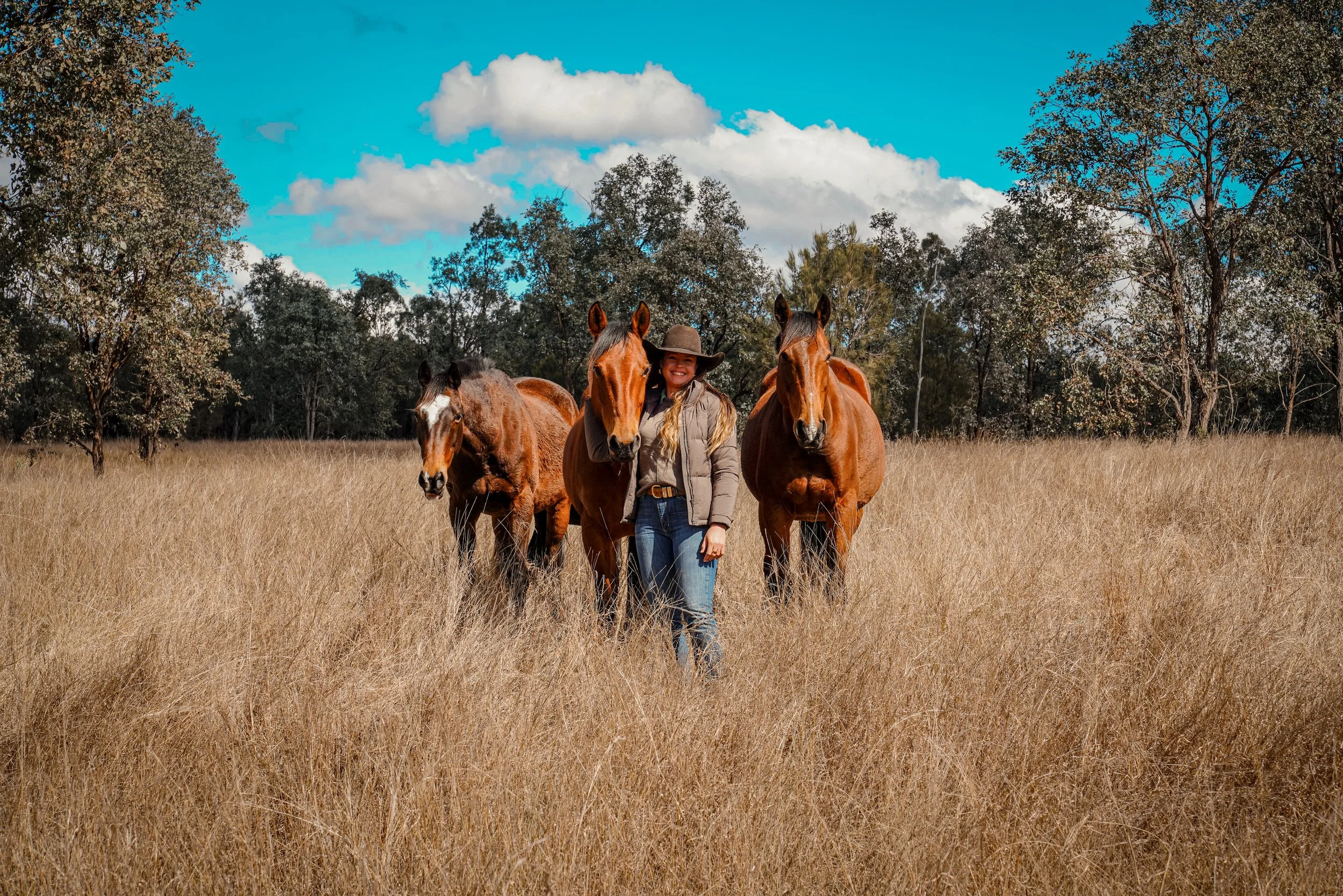
Meet Prue
How did I become the BOS Lady?
Once upon a time,
at boarding school, a good friend and I were having coffee in the common room when she announced that she knew exactly how my life would turn out. (we were 17)
I didn't believe her, of course.
She told me I would move home to the farm, have four kids who would trail behind me like I was Mother Duck, and that the business I grew would be genuinely substantial.
I rolled my eyes and muttered something about her drinking coffee, not tea, so I wasn't sure how she'd managed to read that in the leaves.
Years later, living back at Greystonlea and pregnant with Cora, (my 4th child) I suddenly remembered that conversation. The memory still gives me goosebumps.
I don't believe in fate, and I don't believe that was a premonition, but here we are.
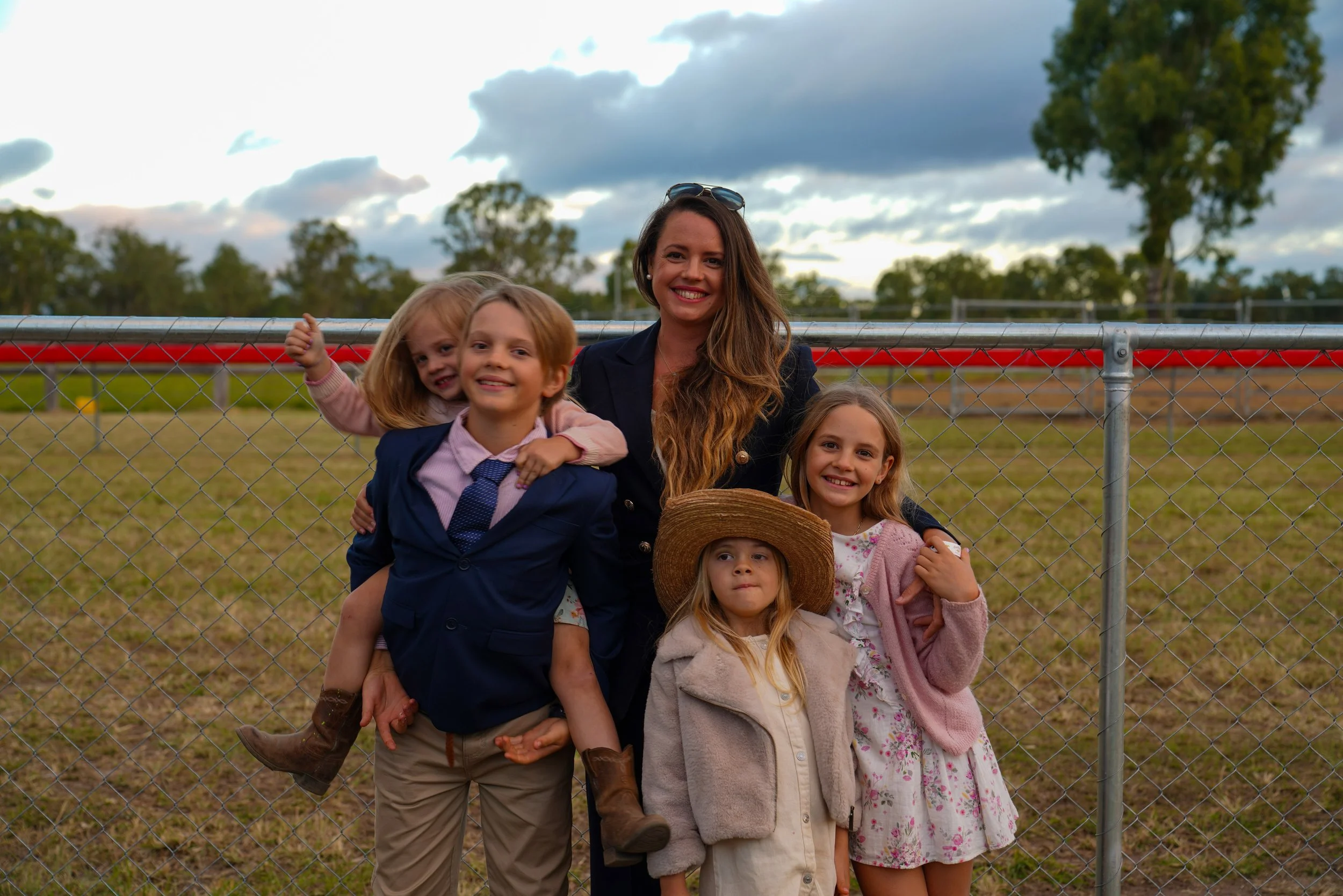
So how did I come to be here, doing this?
Thats not a short story, but i’ll try…
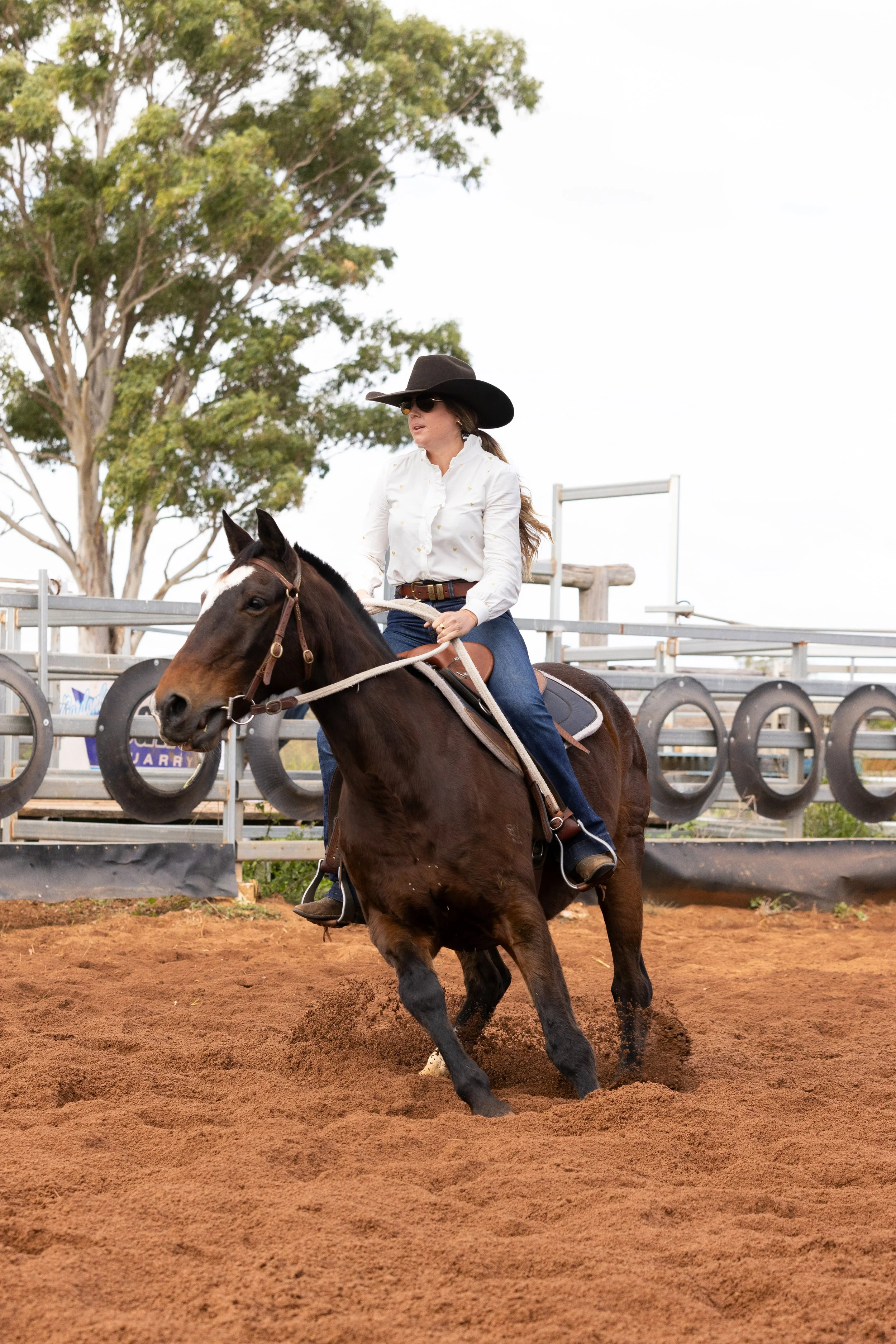
It started, growing up on the farm and working from the time I could see over the dash to drive a truck, ride a horse and be useful. But mostly, I asked a lot of questions.
Why are we doing that? Why does that grow here? Why now? What happens if we do this instead?
Dad is a curious person himself, although even he occasionally asked me to stop asking ‘why’. I didn't. And I suppose that's shaped a lot of my life.
I studied Commerce and Business Management while working full-time in an accounting firm. It gave me a window into some incredible family agricultural businesses and I decided pretty early that the interesting part of accounting wasn't really the accounting. It was the business behind the numbers and the people driving the decisions.
After uni, I took a graduate job with Bentleys in Brisbane and left within the year. At the time it felt like a failure, and I was more than a little rudderless. Looking back, I can see climbing the corporate ladder just wasn't for me.
Life then took me to Tasmania where, alongside my ex-husband, I built a vineyard contracting business before taking a derelict apple orchard and turning it into a winery, cellar door, Airbnb, wedding venue and wine label distributed across four states.
I didn't know how to make wine when I started. So I learned.
With some generous mentors, a lot of reading, an unreasonable number of questions and the general assumption that if another human had figured something out before me, there was a reasonable chance I could too, I got to work.
Along the way I taught myself whatever else the business required, from web development to distribution. I also had three children. It was busy.
But there's a pattern developing, as you'll see.
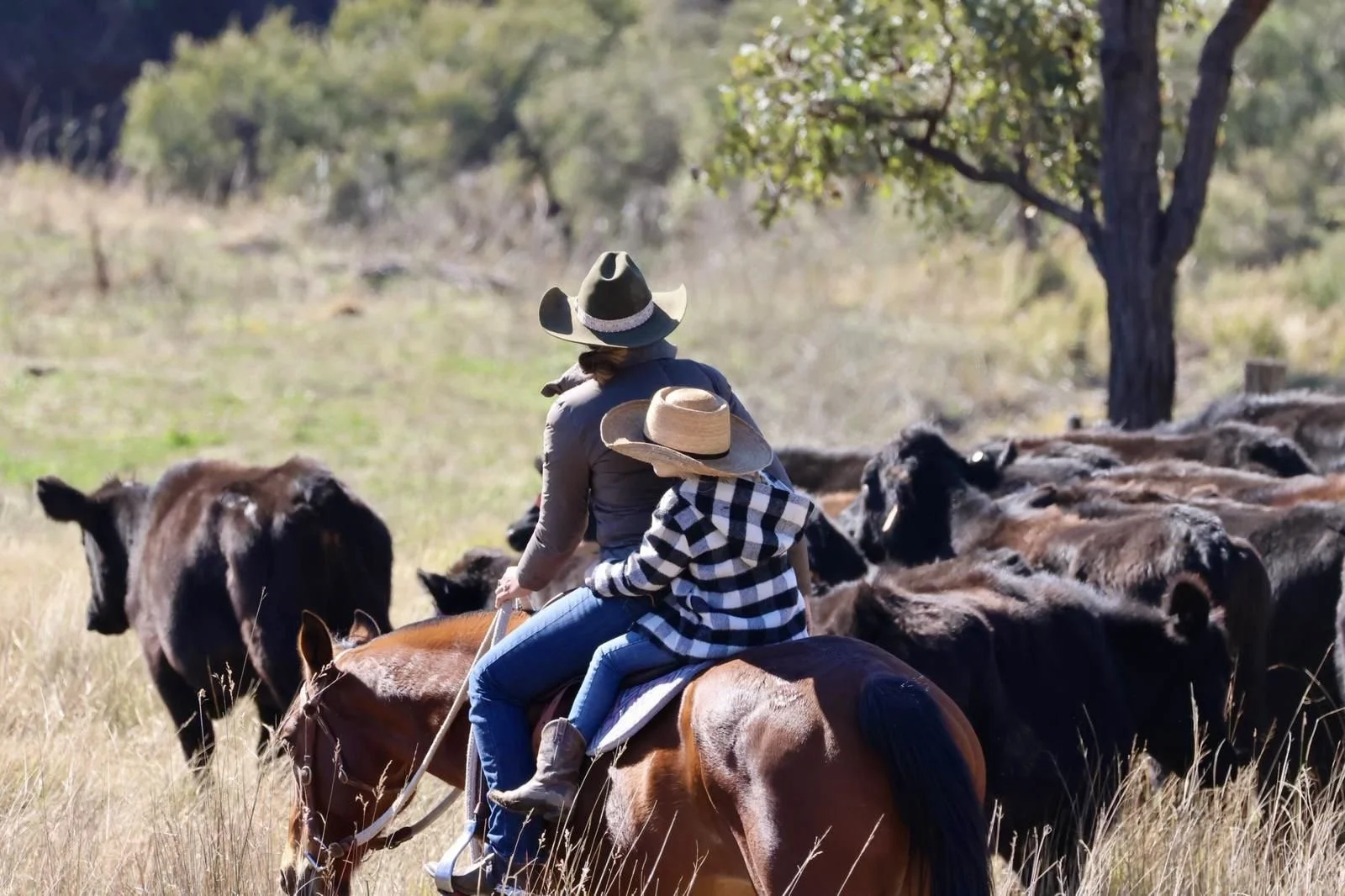
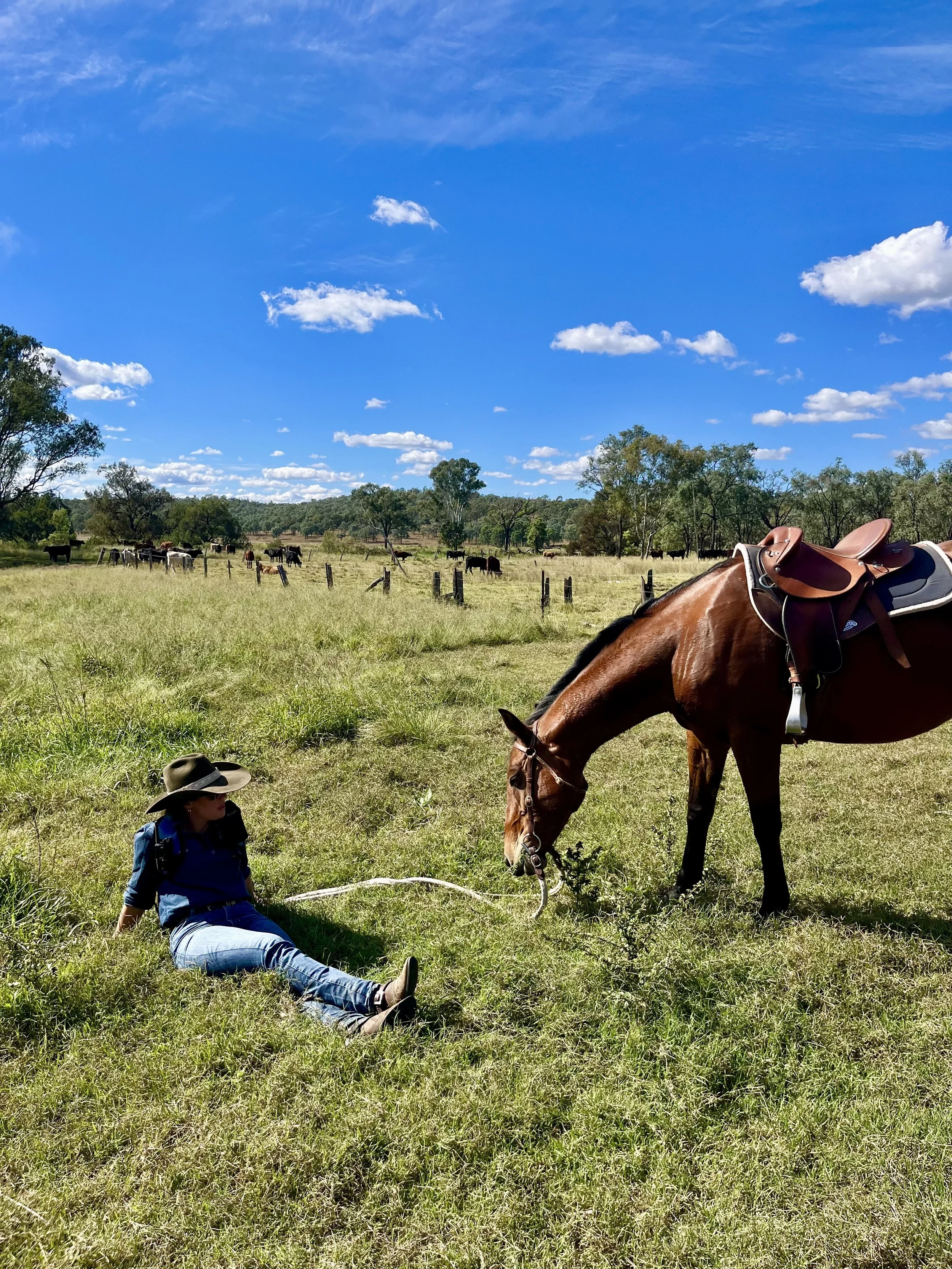
Coming home
In late 2019, I came home to Greystonlea as the start of a succession plan, and a raging drought, with three children in tow.
I've always felt drawn back here. Not particularly to the house — I could take or leave that — but to this place.
I grew up learning about the land, Dad bringing home everything from snakeskins to baby calves and joeys, and absorbing his fascination with the natural world.
Dad and I have very different ideas about some aspects of agriculture, but I'm enormously grateful for what he taught me. He was an early adopter of zero till and controlled traffic. He built things when what he wanted didn't exist, or was out of his price range. He prepared machinery in advance because he understood that missing the window is the difference between a crop and no crop.
And when something genuinely went wrong, one of the most outstanding things about that man was that he got calm. That has stayed with me.
There's very little point having a tantrum when the water is spurting five metres in the air, the cattle are not in the holding paddock anymore and the trucks are at the ramp — or the plan has just gone spectacularly sideways, usually on a Friday afternoon or weekend morning with a deadline.
You can be furious later if you need to.
Right now, you need a solution
Regeneration & Risk
When I first took over at Greystonlea, it was roughly a 450-head breeding operation with a mothballed feedlot, and just one property in my parents' much larger operation.
My first genuinely rebellious management decision was to box the entire breeding herd together and start rotating them around the property as an experiment.
I'd read about regenerative grazing. I understood the theory behind grazing and plant recovery cycles. I'd seen enough to think there was something in it.
Did I have concrete evidence telling me it would work here?
Absolutely not.
In typical Prue fashion, I had a theory, some historical data about what the country could do, and the uncomfortable knowledge that the only difference between courage and stupidity is the outcome.
Thankfully, looking back, it's probably the single best management risk I've taken. And I'm still refining it now.
I've tried plenty of other things since. Some worked. Some were spectacular disasters.
The method hasn't really changed: stay curious, ask good questions, learn as you go and try not to fuck it up the same way twice. (That's just embarrassing.)
Over the period Greystonlea has been under my stewardship, I've more than tripled its carrying capacity and achieved compound annual revenue growth of around 48%. And honestly, I have very little to show for it because I've reinvested every cent I haven't paid to the bank in interest.
Those are numbers I'm proud of, but I'm probably more interested in what it took to produce them, because in my experience luck is notoriously unreliable.
Over the past four years, I found myself raising 4 children on my own,
Navigated some fairly antagonistic court proceedings,
Saw business revenue held in trust for five months,
Had a major cattle market disappear when the market crashed and
Came uncomfortably close to the financial edge more than once.
More recently, my youngest daughter was diagnosed with Type 1 diabetes, which changed the rhythm of our family considerably and added another relentless layer of responsibility.
There have been periods where life has been held together with little more than zip ties, coffee, and sheer bloody determination.
I don't say any of that because I think adversity deserves a medal. I'd quite happily accept a whole lot less of it. But I do occasionally wonder what I might manage if things ever decide to go smoothly.
The business is still here. So am I. And we're actually in not bad shape. Although my jeans are a little tighter than I'd care to admit.
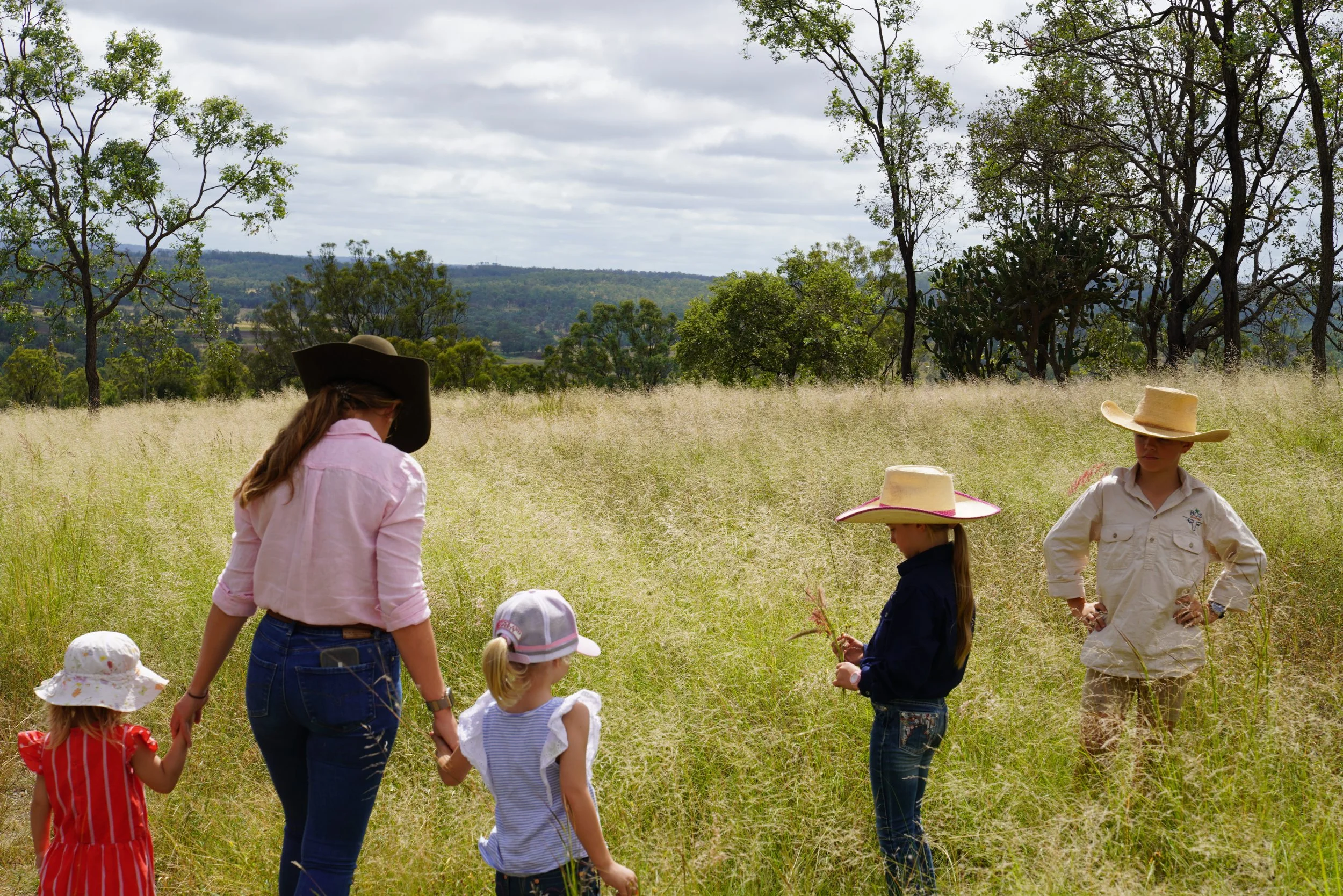
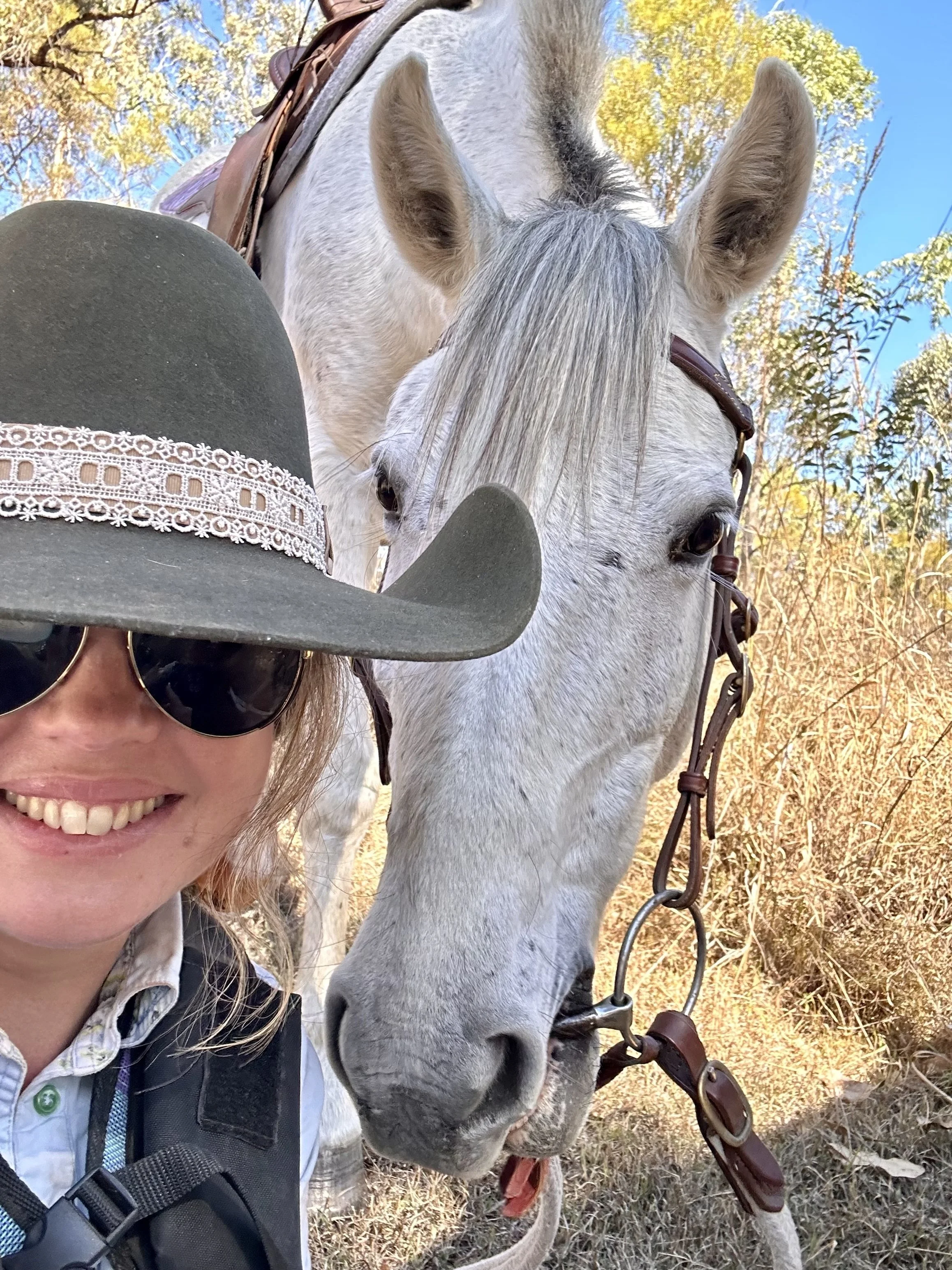
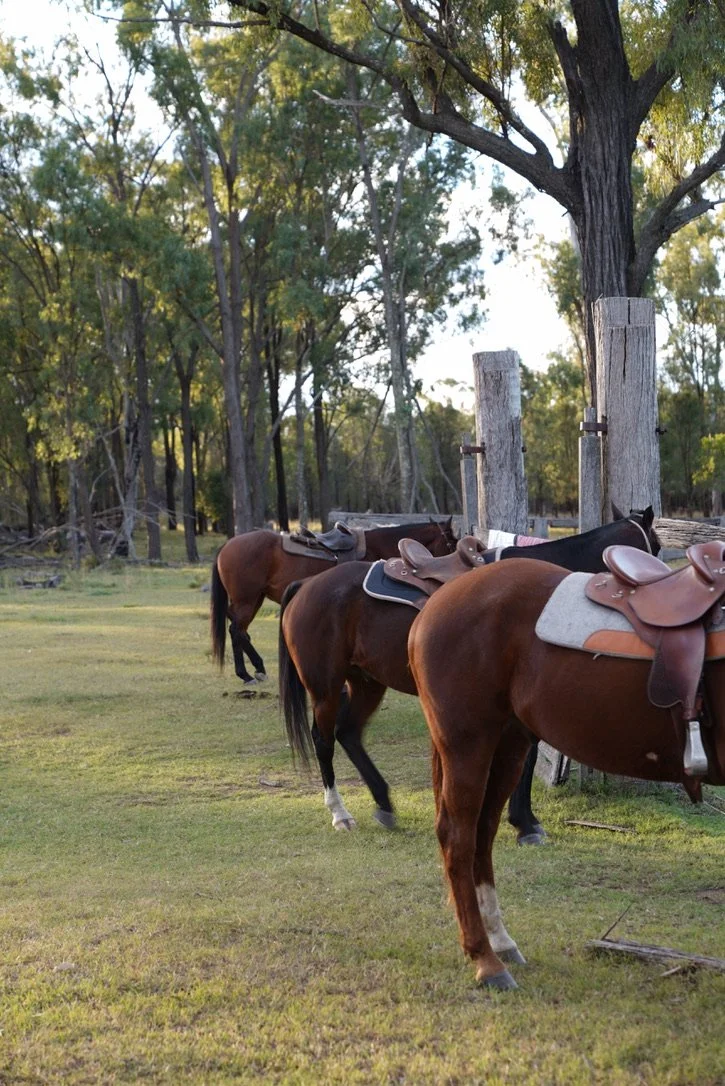
For years, I thought understanding the whole business meant I should also be capable of doing most of it. Apparently being capable of doing something and being the best person in the business to do it are two entirely different questions. Who knew?
These days, I know I'm very good at some things and terrible at others. I still get things wrong, change my mind and ask an unreasonable number of questions. Above all, I'm still learning. And I hope that never changes.
Because underneath the business, the numbers, the cattle and whatever BOS becomes next, what drives me is actually pretty simple.
I'm interested in leaving every place I touch in a better state than I found it — weaving environmental, human and production outcomes together rather than trading one off against another.
Greystonlea is where I've had the privilege of learning how to do that.
And I have a feeling I'm only just getting started.
Many hats, but my green circle L is my favourite.
The hats I've worn are numerous and varied, not because I've had to, but because I've chosen to.
I strongly believe you can't fully delegate what you don't fully understand, so I've made it my business to understand the businesses I run, teaching myself first and others later.
Not everyone agrees with this and, in fairness, it has slowed my progress at times. But the result is a depth and breadth of working knowledge I wouldn't trade.
I can read between the lines of a balance sheet as easily as I can read a paddock. Give me a set of variables and I love working out how they connect.
I love good data and technology, and BOS adopts both readily. But I don't believe you can run a cattle business from a spreadsheet or a fancy app any more than you can become a good horseman by comparing 27 metrics about your horse.
Equally, I don't think we've always done it this way is a particularly good argument.
Dad taught me a lot about the plants, seasons and country here. I wish I'd known my grandfather because he had another lifetime of knowledge about this piece of land that disappeared with him.
There is an art to good agriculture.
For me, the interesting part, is combining that ancestral knowledge with everything science, technology and data can now tell us. And I think that's probably a reasonable description of how I operate too.
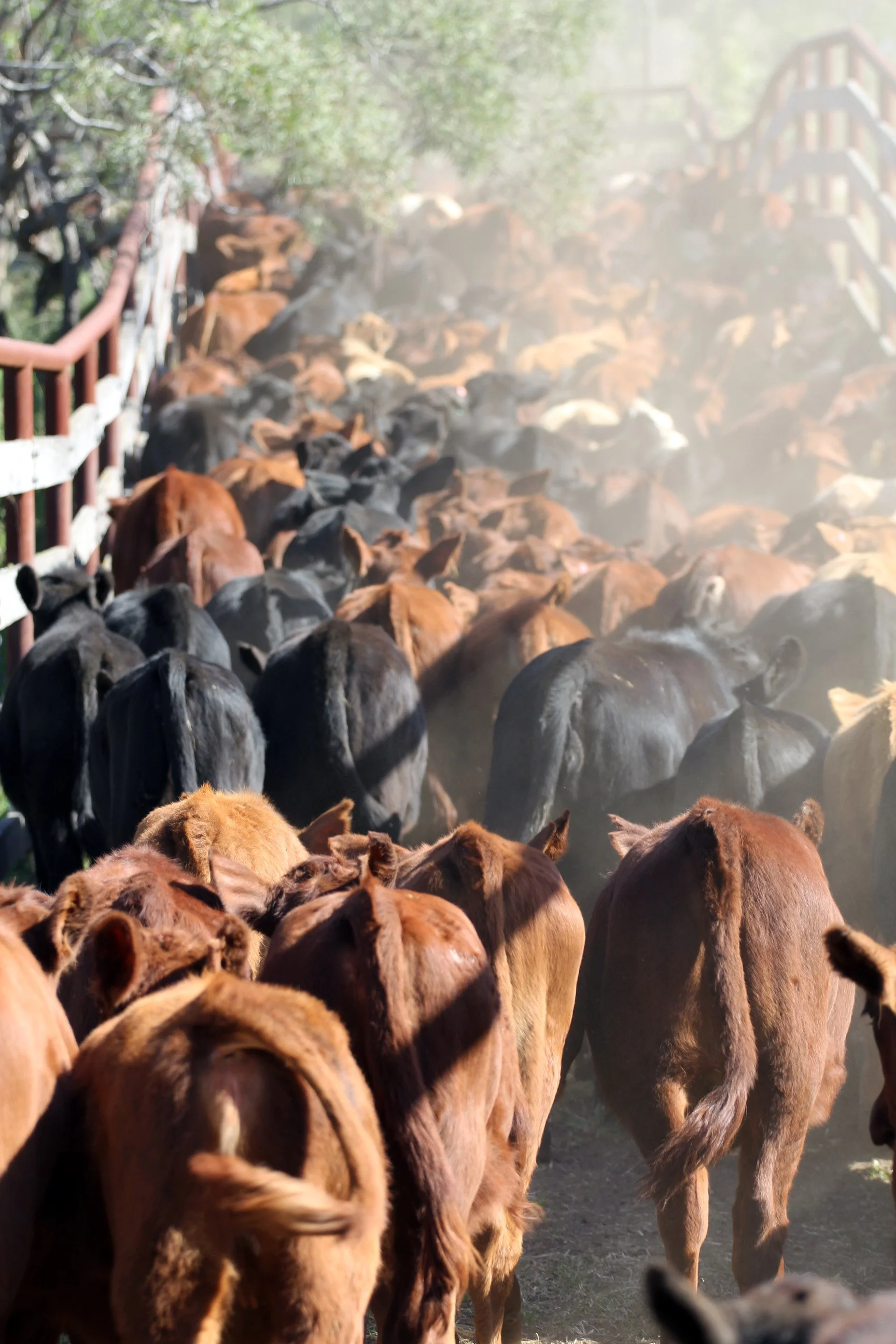
I can build a cashflow model, talk cattle, argue economics, ride a horse and hold my own in a boardroom. I'm in the office much more than I'd like these days, but I still shovel bunks, induct cattle, run the back yards and jump on a horse when I need to.